The Strange Comeback of Letter-Writing Communities
Mary Shelby
June 3, 2026
In an age of instant messaging, video calls, and social media, handwritten letters seem like a relic of the past. Communication has never been faster or more convenient. A message can travel across the world in seconds, and conversations can happen continuously throughout the day.
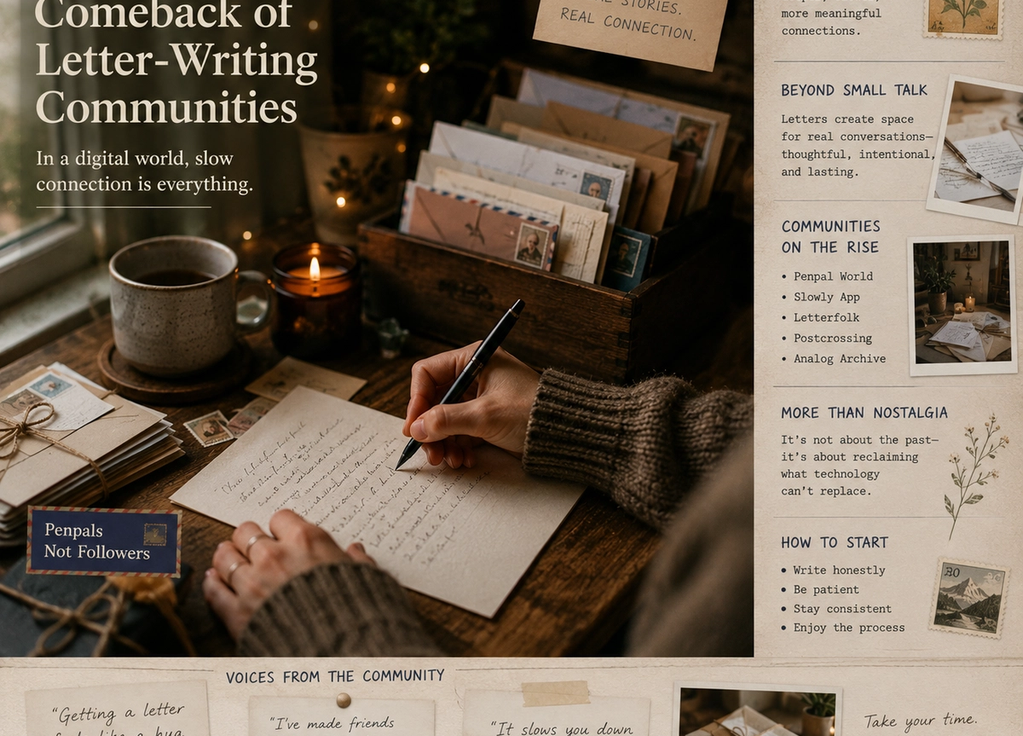
Yet despite these advances, letter-writing communities are experiencing a surprising revival. Across the world, people are joining pen pal groups, exchanging handwritten notes, and rediscovering the appeal of slower, more intentional communication. What appears to be an outdated practice is finding new relevance in a digital world.
Key Takeaways
- Letter-writing communities are growing despite the dominance of digital communication
- Handwritten letters offer a slower and more thoughtful form of connection
- Physical mail creates a sense of anticipation that digital messages lack
- Many people are seeking deeper, more meaningful interactions
- The revival reflects a desire for authenticity in an increasingly digital world
1. Slower Communication Feels More Meaningful
Most modern communication is designed for speed. Messages are sent instantly, replies are expected quickly, and conversations often move rapidly from one topic to another.
Letter writing operates on a completely different timeline. A letter may take days or even weeks to reach its destination, and responses require patience. While this slower pace might seem inconvenient, many people find that it encourages more thoughtful communication.
Without the pressure of immediate replies, people often take more time to reflect on what they want to say. As a result, conversations can feel deeper and more intentional.
2. Physical Letters Feel Personal
Digital messages are convenient, but they often look the same regardless of who sends them. Fonts, layouts, and screens create a uniform experience.
A handwritten letter carries personal details that cannot be easily replicated. The handwriting, paper choice, small drawings, and even minor imperfections make each letter unique. These physical elements create a stronger sense of presence and personality.
Receiving a letter can feel less like receiving information and more like receiving a piece of someone’s time and attention.
3. Anticipation Becomes Part of the Experience
Modern technology has largely eliminated waiting. While this convenience is valuable, it has also removed some of the excitement that anticipation can create.
Letter-writing communities bring that feeling back. There is something special about checking the mailbox and discovering a handwritten letter waiting inside. The delay between sending and receiving becomes part of the experience rather than an obstacle.
For many participants, this anticipation adds a sense of excitement that instant communication rarely provides.
4. People Are Seeking Deeper Connections
Social media allows people to stay connected with hundreds or even thousands of individuals. Yet many people report feeling disconnected despite being constantly online.
Letter writing offers a different type of interaction. Instead of quick comments, likes, or short messages, participants often share stories, experiences, and reflections in greater detail. The slower pace encourages meaningful conversations that can develop over months or even years.
In a world filled with brief interactions, this depth feels increasingly valuable.
5. It Provides a Break From Digital Overload
Many people spend large portions of their day looking at screens. Work, entertainment, shopping, and communication often happen through digital devices.
Writing and receiving letters offers a refreshing alternative. The process encourages people to slow down, focus on a single task, and engage with something tangible. For some, it feels almost meditative.
The experience provides a temporary escape from notifications, algorithms, and the constant flow of online information.
Why Younger Generations Are Interested
One of the most surprising aspects of this revival is that many participants grew up in the digital age. Rather than viewing letter writing as outdated, they often see it as something novel and refreshing.
For younger generations who have spent most of their lives communicating through screens, handwritten letters offer an experience that feels unique and memorable. What was once considered old-fashioned has become distinctive precisely because it is no longer common.
This reversal has helped introduce letter writing to an entirely new audience.
The Return of Thoughtful Communication
The comeback of letter-writing communities is not simply about nostalgia. It reflects a broader desire for slower, more meaningful forms of connection.
As communication becomes increasingly fast and automated, many people are discovering the value of taking their time. Writing a letter requires effort, patience, and attention—qualities that can feel rare in modern life.
Perhaps that is why letter writing continues to attract new enthusiasts. In a world where almost everything is instant, a handwritten letter offers something increasingly uncommon: a conversation worth waiting for.