The Surprising Cost of Always Being Optimized
Mary Shelby
June 6, 2026
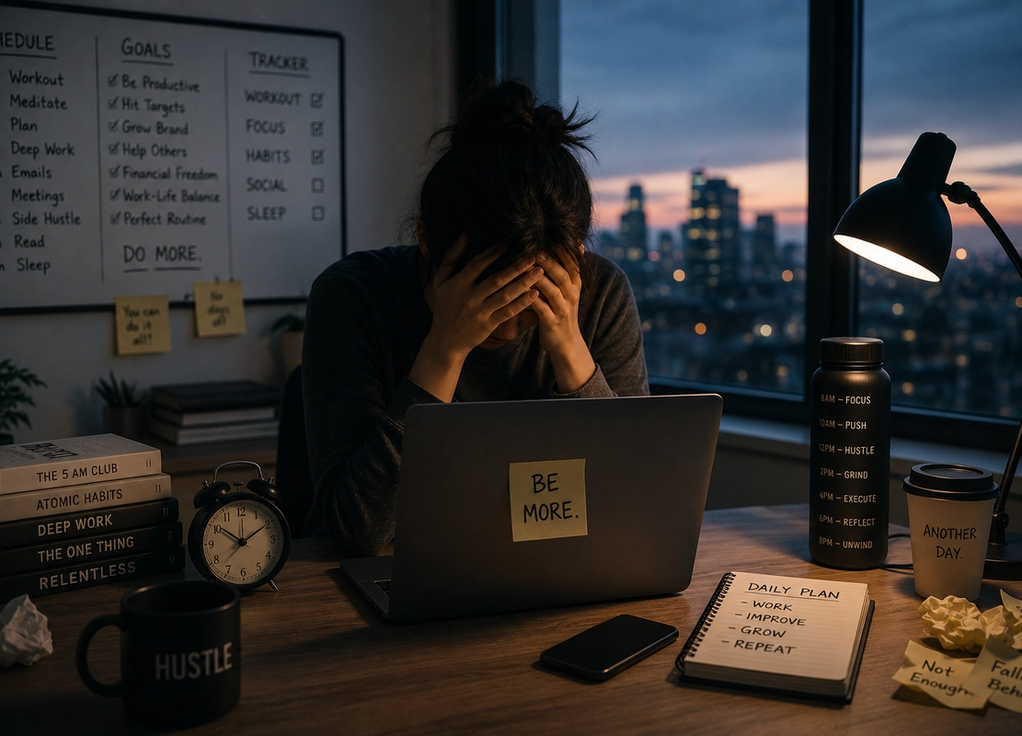
Modern life is filled with advice on how to improve. There are productivity systems to streamline work, fitness trackers to monitor health, apps to optimize sleep, and endless content promising better habits, greater efficiency, and maximum performance. The message is often the same: there is always a way to do more, improve faster, and get better results.
While self-improvement can be valuable, the pursuit of constant optimization comes with a hidden cost. When every aspect of life becomes a project to improve, it can become difficult to relax, enjoy the present moment, or feel satisfied with what already exists. What begins as a desire for growth can gradually turn into a mindset where nothing ever feels good enough.
Key Takeaways
- Constant optimization can create pressure rather than freedom
- Efficiency is useful, but not every part of life benefits from being optimized
- The pursuit of improvement can sometimes reduce enjoyment
- Rest, spontaneity, and imperfection have their own value
- Sustainable growth requires balance, not endless self-monitoring
1. Improvement Can Become a Never-Ending Goal
One challenge of optimization is that there is rarely a clear finish line. No matter how much progress someone makes, there is always another metric to improve, another habit to refine, or another area of life to upgrade.
This creates a cycle where achievement brings only temporary satisfaction before attention shifts to the next target. Instead of appreciating progress, people may become focused on what still needs improvement.
Over time, growth begins to feel less rewarding because it is never allowed to feel complete.
2. Efficiency Is Not the Same as Fulfillment
Many optimization strategies are designed to help people use their time more effectively. In the right context, this can be extremely useful. However, efficiency and fulfillment are not always the same thing.
Some of life’s most meaningful experiences are inefficient by nature. Long conversations with friends, unplanned afternoons, creative hobbies, and quiet moments of reflection often produce no measurable output. Yet these experiences contribute significantly to happiness and well-being.
When every activity is judged by productivity, it becomes easy to overlook what makes life enjoyable.
3. Constant Self-Monitoring Can Be Exhausting
Technology makes it easier than ever to track performance. People can monitor steps, sleep quality, screen time, productivity levels, calorie intake, and countless other metrics.
While data can be helpful, constant measurement can also create mental fatigue. Instead of listening to their own experiences, people may become overly focused on numbers and targets.
The result is that self-improvement starts to feel less empowering and more like an endless evaluation.
4. Perfectionism Often Hides Behind Optimization
The desire to optimize is frequently presented as a healthy pursuit of growth. Sometimes it is. However, it can also become a socially acceptable form of perfectionism.
When people constantly search for the best routine, the perfect schedule, or the most effective strategy, they may be trying to avoid mistakes or uncertainty. The pursuit of optimization can create the illusion that every outcome is controllable if only the right system is found.
In reality, life remains unpredictable no matter how carefully it is planned.
5. Spontaneity Has Value
Not everything meaningful can be scheduled, measured, or optimized. Some of life’s best experiences happen unexpectedly.
A spontaneous conversation, an unplanned trip, a new friendship, or a creative idea often emerges outside carefully structured routines. These moments may seem inefficient, but they add richness and variety to life.
When every minute is optimized, there is less room for the unexpected experiences that often become the most memorable.
Why Balance Matters
The goal is not to reject self-improvement. Growth, learning, and healthy habits can improve quality of life in meaningful ways. Problems arise only when optimization becomes the primary lens through which everything is viewed.
A balanced approach recognizes that some parts of life benefit from structure while others benefit from freedom. Work may require efficiency, but relationships, creativity, and leisure often flourish when they are allowed to develop naturally.
The challenge is knowing when improvement is helping and when it is becoming a source of pressure.
The Freedom to Be Imperfect
The most fulfilling life is not necessarily the most optimized one. It is often the one that leaves room for rest, enjoyment, curiosity, and human connection.
Constant improvement can be valuable, but so can accepting that some things are already good enough. Not every moment needs to be productive, and not every experience needs to be measured.
The surprising cost of always being optimized is that life can start to feel like a performance rather than an experience. Sometimes the healthiest choice is not finding a better system, but stepping away from optimization altogether and simply being present.
Growth matters. But so does the ability to enjoy life without turning every part of it into a project.