
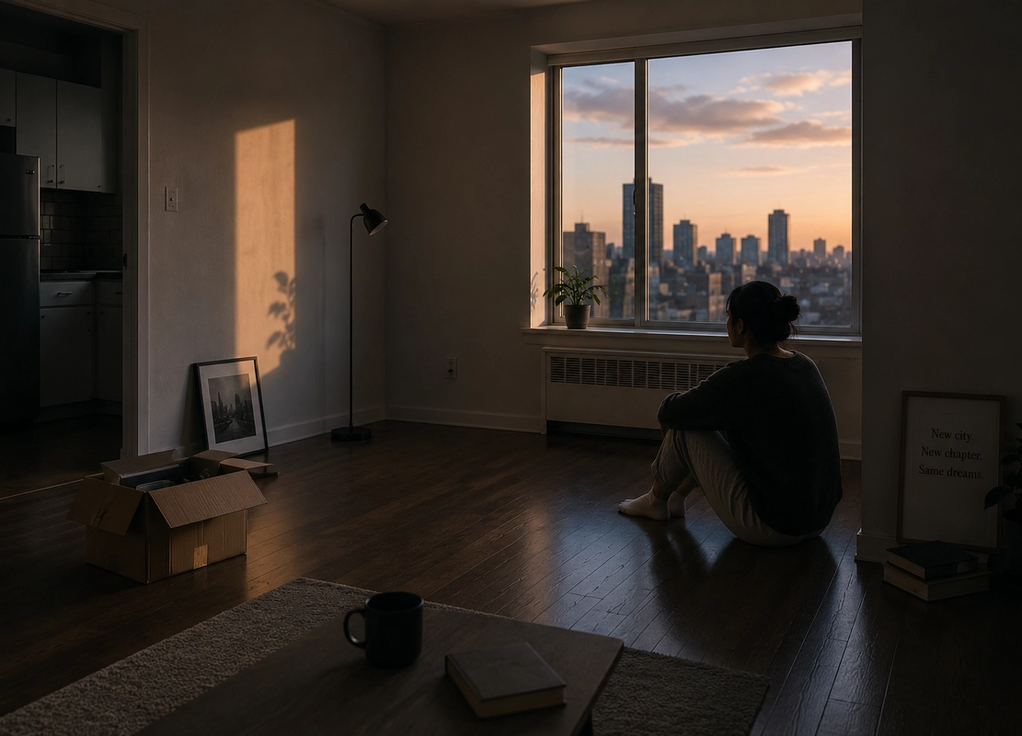
The Cultural Weight of an Empty Apartment
Mary Shelby
June 6, 2026
An empty apartment is, on the surface, a simple thing. It is just a space between tenants, a room waiting to be furnished, or a set of walls without personal belongings. Yet culturally and emotionally, an empty apartment often carries far more meaning than its physical appearance suggests.
Whether encountered in real life, literature, films, or photographs, empty living spaces tend to evoke strong emotions. They can symbolize freedom, loneliness, transition, possibility, uncertainty, or loss—all at the same time. The reason is that a home is rarely viewed as just a physical structure. It is often seen as an extension of a person’s identity and life story.
Key Takeaways
- Empty apartments often symbolize transition and change
- People project personal meaning onto living spaces
- A vacant home can represent both freedom and loneliness
- Modern housing culture has given homes strong emotional significance
- Empty spaces often trigger reflection about identity, belonging, and the future
1. Empty Spaces Represent Possibility
One reason empty apartments feel significant is that they are filled with potential. Before furniture arrives and routines are established, the space can become almost anything.
A new tenant may imagine future friendships, career milestones, family moments, or personal transformations taking place there. The apartment becomes a blank canvas onto which hopes and expectations are projected.
This sense of possibility explains why empty spaces can feel surprisingly emotional, even before a single object is moved inside.
2. They Mark the End of a Chapter
An empty apartment often exists because someone has left. The furniture is gone, the walls are bare, and the signs of daily life have disappeared.
As a result, the space can feel like evidence of a completed chapter. Relationships may have ended there. Careers may have begun there. Important life events may have unfolded within those rooms.
Even when the details are unknown, the absence itself invites reflection on the lives that once occupied the space.
3. Homes Have Become Part of Personal Identity
Modern culture places significant emphasis on living spaces. Homes are frequently presented as reflections of personality, values, taste, and lifestyle.
Social media, interior design trends, and lifestyle content have strengthened this connection. People often express themselves through how they decorate, organize, and personalize their environments.
When a home is empty, those identity markers disappear. The space becomes strangely anonymous, reminding us how much meaning people attach to the places they live.
4. Freedom and Loneliness Often Exist Together
An empty apartment can symbolize independence. For someone moving into their first place, it may represent freedom, privacy, and the beginning of a new stage of life.
At the same time, emptiness can also evoke loneliness. Without people, furniture, or familiar signs of life, a space may feel quiet in a way that is comforting to some and unsettling to others.
This duality is part of what makes empty apartments so emotionally powerful. They can represent liberation and isolation simultaneously, depending on the perspective of the observer.
5. They Remind Us That Life Is Temporary
Most people do not stay in one home forever. Apartments change occupants, neighborhoods evolve, and personal circumstances shift over time.
An empty apartment makes this reality visible. It highlights how temporary even familiar environments can be. The rooms remain, but the people, routines, and stories eventually move elsewhere.
This reminder of impermanence often creates a subtle emotional response, even when people cannot immediately explain why.
Why Empty Apartments Appear So Often in Stories
Writers, filmmakers, and photographers frequently use empty living spaces because they are rich with symbolic meaning. A vacant apartment can suggest a fresh start, a personal loss, an uncertain future, or a moment of self-discovery without a single word of dialogue.
Viewers naturally fill the empty space with imagined narratives. They wonder who lived there, why they left, and what might happen next. The absence of detail invites interpretation.
In this way, the apartment becomes more than a setting—it becomes part of the story itself.
More Than Just an Empty Room
An empty apartment is rarely perceived as merely empty. It carries traces of the past and possibilities for the future. It reflects both the lives that have ended within its walls and the lives that have yet to begin there.
Perhaps that is why these spaces feel so significant. They sit at the intersection of memory, identity, and change. They remind us that homes are not just places where people live. They are places where people become who they are.
For a brief moment between one chapter and the next, an empty apartment holds countless stories at once—even when no one is there.