Why “Hate-Watching” Became a Real Pastime
Mary Shelby
June 6, 2026
Most forms of entertainment follow a simple logic: people watch things they enjoy. We choose movies, television shows, videos, and online content because they entertain us, teach us something, or help us relax. Yet modern media has given rise to a curious exception to this rule.
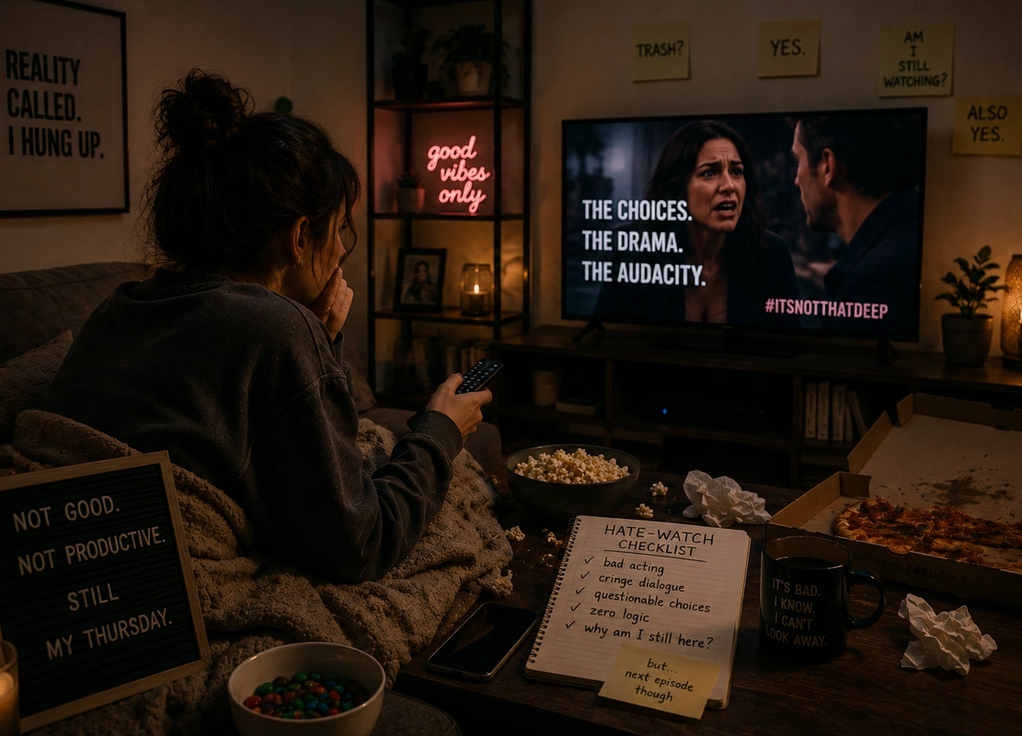
Millions of people regularly spend time watching content they claim to dislike. They follow television shows they think are terrible, keep up with influencers they find irritating, or watch entire series only to criticize them afterward. This behavior, commonly known as “hate-watching,” has become a genuine cultural phenomenon.
At first glance, it seems irrational. Why would someone voluntarily spend time consuming content they do not enjoy? The answer reveals a great deal about human psychology, social interaction, and the way modern media works.
Key Takeaways
- Hate-watching combines entertainment with criticism and commentary
- Strong negative reactions can be as engaging as positive ones
- Social media encourages discussion around controversial content
- People often enjoy the shared experience of criticism
- Hate-watching reflects how entertainment and online culture have become intertwined
1. Strong Emotions Keep People Engaged
Entertainment does not always succeed by making people happy. Sometimes it succeeds by making them feel something intensely.
Humans are naturally drawn to emotional experiences, whether positive or negative. A frustrating reality show, a controversial character, or a poorly written plot can provoke strong reactions that keep viewers invested.
Ironically, content that inspires irritation can sometimes be more memorable than content that is simply pleasant. People continue watching because they want to see what happens next, even if they are constantly complaining about it.
2. Criticism Can Be Entertaining
For many hate-watchers, the enjoyment comes less from the content itself and more from analyzing it.
Discussing plot holes, questionable decisions, awkward performances, or dramatic moments can become a form of entertainment in its own right. Watching something critically often turns the experience into a kind of ongoing commentary.
In this sense, the audience is not simply consuming content. They are actively participating in a conversation about it.
3. Social Media Changed the Experience
Before social media, watching a disappointing show was often a private experience. Today, viewers can instantly share reactions with thousands of others.
Platforms are filled with memes, jokes, reviews, and discussions about controversial content. These conversations transform individual frustration into a shared social activity.
People may continue watching a show not because they enjoy the show itself, but because they enjoy participating in the online discussions that surround it.
4. Curiosity Often Wins
Many hate-watched programs succeed because viewers become curious about what will happen next.
Even when a show is disappointing, people often want closure. They become invested in characters, storylines, or ongoing controversies. After spending hours following a series, walking away can feel surprisingly difficult.
This creates a situation where viewers continue watching despite their complaints because curiosity remains stronger than dissatisfaction.
5. Hate-Watching Creates Community
One of the most overlooked aspects of hate-watching is its social dimension. Shared criticism can create a sense of community in much the same way that shared enthusiasm can.
People bond over inside jokes, collective reactions, and discussions about content they find ridiculous or frustrating. The experience becomes less about the show itself and more about the people discussing it.
In some cases, the community surrounding a piece of content becomes more engaging than the content itself.
Why Modern Media Encourages It
Today’s media environment rewards attention above all else. Whether viewers love something or hate it, engagement often produces the same result: more visibility.
Controversial content generates reactions, discussions, articles, memes, and social media posts. These responses keep the content in public conversation and encourage even more people to watch.
As a result, strong negative reactions can sometimes become part of a content’s popularity rather than a sign of its failure.
More Than Just Disliking a Show
Hate-watching is not really about suffering through entertainment. It is about the strange ways people engage with media in the digital age.
Viewers are no longer passive audiences. They analyze, critique, joke about, and discuss content as part of a broader social experience. Sometimes the entertainment comes from the conversation surrounding the show rather than the show itself.
This helps explain why people continue watching things they claim to dislike. The experience is no longer limited to what happens on screen.
The Pleasure of Shared Frustration
The rise of hate-watching reveals that enjoyment is more complicated than simply liking something. People can find value in criticism, humor, debate, and collective reactions.
While it may seem strange to devote time to content that inspires complaints, the real attraction often lies in the emotions and conversations that follow. In a connected world, even frustration can become a form of entertainment.
That is why hate-watching has become a genuine pastime. People are not just watching the show. They are participating in the culture that forms around it.